

An ERP or CRM project pays off only when people actually use it. The software is bought once; its value is delivered every day, as data stays current, reports earn trust, and workflows are actually followed. That is why adoption, not go-live, is the real moment of truth. Yet training is usually the first thing squeezed in an implementation: short on time, generic in content, and scheduled before users feel the pressure of real work. Months later, managers ask why the new system is not being used, and the honest answer is rarely the software. It is the gap between what the system can do and what people have learned to do with it.
We treat training and adoption as a change programme, not a course catalogue. Training is organised by role, so each person learns what their job actually requires, in the context of their own processes and on the applications their team lives in: month-end close and reporting in Dynamics 365 Business Central, pipelines and forecasting in Dynamics 365 Sales, case management in Dynamics 365 Customer Service. User acceptance testing (UAT) gives those same people a structured chance to test the system with their own real scenarios before go-live, so they meet it as confident users rather than as an audience at a demonstration. And because habits form after go-live, at the first month-end and the first quarter, refreshers and coaching keep momentum when it matters most.
This page sets out what our training and adoption service includes, how we work with your people, and where to read further, whether you are mid-implementation and planning UAT and go-live, or already live and want to lift how well the system is used.

Role-based training runs in small groups, around your own data and scenarios.
What’s included
- Role-based training sessions built around each team’s real work: no feature-by-feature tours, no modules nobody will ever use.
- UAT design and facilitation: test scenarios drawn from your own processes, run in structured cycles until your team signs off with confidence.
- A train-the-trainer programme that turns your strongest users into internal instructors, so knowledge keeps spreading after we leave.
- Quick-reference guides and cheat sheets for day-to-day tasks, so “how do I do this again?” questions have an instant answer.
- Month-one refresher workshops after your first full cycle, when real questions surface and habits are still forming.
- Manager briefings and change communications that help leaders model the new way of working.
- An adoption health check after the first quarter, with usage reporting and practical recommendations for the teams and modules that need attention.
How we work
We start by understanding how your people currently work and where the new system will stretch them. We observe processes, talk to managers, and map each role to the parts of the platform it touches. That map becomes the curriculum. Sessions are hands-on, in small groups, in the language your teams work in, and built around your own data and scenarios, not a generic training environment. People learn their job, not the product manual.
UAT runs in the same spirit. We work with your process owners to design test scenarios from your real workflows, then run structured cycles with findings triaged and fixed until your team signs off. The people who tested the system become its first advocates. Alongside them we identify the natural champions (the colleagues everyone already asks for help) and invest in them through the train-the-trainer programme: deeper sessions, coaching on how to teach, and materials they can run themselves. Your business then owns its own knowledge instead of depending on consultants every time someone joins or a process changes. During an implementation, this work is planned as part of our system implementation service, so training and UAT are never an afterthought squeezed in before go-live.
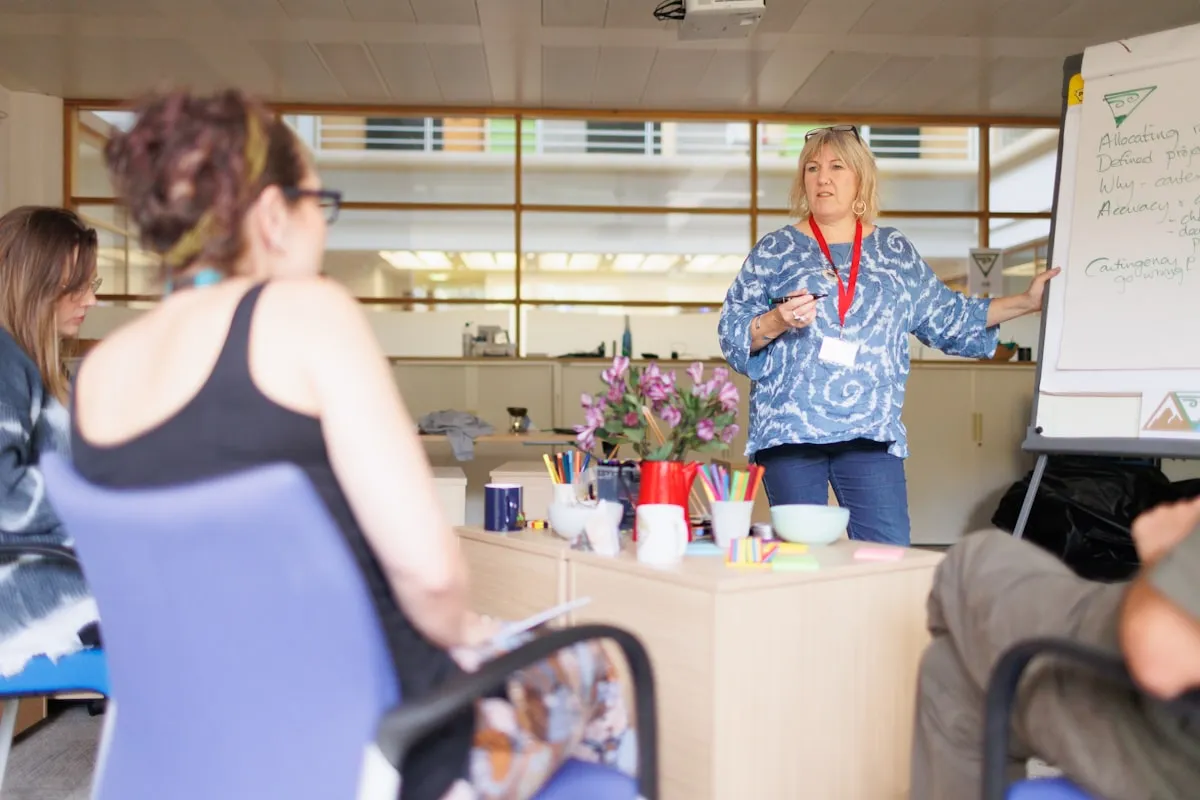
The people who test the system become its first advocates, and its natural champions become internal instructors.
We come back when it matters. The first month-end and the first quarter are when users form permanent habits, so we return for refresher workshops at that point, when people finally have real questions and can see why the new way is better. An adoption health check a few months in reviews usage data, finds the modules and teams that have quietly gone quiet, and produces a practical plan (targeted coaching, workflow tweaks, or small system changes) to close the gap. Adoption becomes something you can measure and manage rather than hope for.
Training and support reinforce each other. When recurring questions reach the helpdesk, they are usually a sign of a training gap rather than a fault. Our technical support consultants flag those patterns, and we schedule targeted refreshers to close them. That loop turns a well-implemented system into a well-used one: the difference between owning software and getting value from it.
Further reading
- A step-by-step approach to implementing Dynamics 365 Business Central: where training and UAT fit in a structured roll-out.
- How to select an ERP system: choose a platform your people will actually want to use.
- What is Dynamics 365: an orientation to the platform your team is learning.
- Cloud-based ERP and CRM systems: what businesses must know: how moving to the cloud changes the way your people work.