Introduction
In today’s fast-moving digital economy, businesses are under constant pressure to operate more efficiently while delivering better customer experiences. Relying on disconnected systems and spreadsheets is no longer sustainable. A modern enterprise resource planning (ERP) solution provides a unified platform that connects finance, operations, and data – enhanced by AI-driven capabilities that enable smarter automation and faster decision-making.
What is an Enterprise Resource Planning (ERP) Solution?
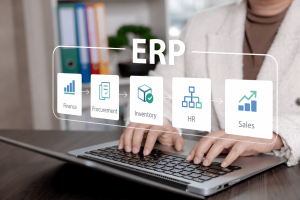
An enterprise resource planning (ERP) solution is an integrated system that centralizes core business functions into a single platform. Instead of managing multiple standalone tools, ERP enables organizations to run their entire operations – from finance and inventory to sales and procurement – within one unified system.
Modern ERP systems go beyond transactional processing. With the introduction of Generative AI and Agentic AI, they can now generate insights, automate workflows, and even execute business actions – transforming ERP into a strategic business platform rather than just an operational tool.
Traditional vs Modern Businesses: How ERP Has Evolved
Businesses today operate in a vastly different environment compared to the past. While traditional organizations relied on manual processes and disconnected systems, modern businesses demand speed, integration, real-time intelligence, and increasingly, AI-driven automation.
Key Differences Between Traditional and Modern Business Operations
Area | Traditional Businesses | Modern Businesses |
|---|---|---|
Systems Landscape | Multiple standalone systems | Fully integrated, intelligent platforms |
Data Management
| Data silos, duplication
| Centralized, AI-enhanced insights
|
Reporting
| Manual, delayed
| Real-time dashboards with AI insights
|
Decision-Making
| Reactive
| Proactive and AI-assisted
|
Processes
| Manual, spreadsheet-driven
| Automated with intelligent workflows
|
Scalability
| Limited
| Cloud-based and highly scalable
|
Accessibility
| On-premise only
| Anywhere, anytime
|
Customer Experience | Inconsistent
| Seamless and responsive
|
Traditional ERP systems were designed primarily to record transactions and manage back-office functions such as finance and inventory. While effective for basic operations, they often lacked flexibility, integration, and real-time capabilities.
Modern ERP solutions have evolved into intelligent business platforms that connect the entire organization. They deliver real-time visibility, integrate seamlessly with CRM and external systems, and automate end-to-end processes. More importantly, they leverage Generative AI to summarize data and generate insights, and Agentic AI to initiate workflows and execute actions automatically.
ERP has therefore evolved from a system of record, to a system of intelligence, and now into a system of action – capable of not just informing decisions, but driving them.
As business complexity increases and expectations continue to rise, relying on outdated systems is no longer sustainable. Organizations are rapidly adopting modern ERP solutions to stay competitive and future-ready.
Why Modern Businesses Need ERP Systems
Today’s business environment is no longer just about growth – it is about control, speed, intelligence, and resilience. Organizations that continue to rely on fragmented systems and manual processes face increasing risks that directly impact profitability and scalability.
A key challenge is the lack of real-time visibility. Decision-makers often rely on outdated or manually compiled reports from multiple systems, leading to delays and errors. Modern ERP systems provide real-time, end-to-end visibility, while AI capabilities help summarize complex data into actionable insights instantly.
Operational inefficiencies also remain a major concern. Manual processes, duplicate data entry, and disconnected workflows consume valuable resources. ERP systems standardize and automate these processes, while Agentic AI takes it further by triggering workflows – such as approvals, replenishment, or follow-ups – without manual intervention.
Data inconsistency is another critical issue. When departments maintain separate data sources, conflicting information becomes inevitable. ERP establishes a single source of truth, enhanced by AI that can detect anomalies and highlight trends that might otherwise go unnoticed.
As businesses scale, complexity increases. Without the right systems, expansion leads to operational breakdowns and poor coordination. ERP provides a scalable foundation for multi-entity and multi-location operations, while AI helps manage this complexity efficiently.
At the same time, businesses must make faster decisions. With integrated data and AI-driven insights, ERP enables organizations to respond quickly to market changes, supply chain disruptions, and customer demands.
Regulatory requirements are also becoming more stringent. ERP systems provide built-in controls, audit trails, and standardized reporting, while AI can assist in monitoring compliance and identifying irregularities.
Customer expectations have also evolved. Businesses must deliver faster, more accurate, and more personalized experiences. ERP connects front-office and back-office processes, enabling better service delivery and fulfilment accuracy.
Finally, the continued reliance on spreadsheets is no longer sustainable. While flexible, spreadsheets introduce risks such as version control issues, human error, and lack of auditability. ERP replaces this with a structured, secure, and scalable system, further enhanced by AI-driven automation and analysis.
Modern ERP systems are no longer just tools for efficiency – they are intelligent and increasingly autonomous platforms that help businesses gain control, reduce risk, and scale with confidence.
Key Capabilities of a Modern ERP Solution
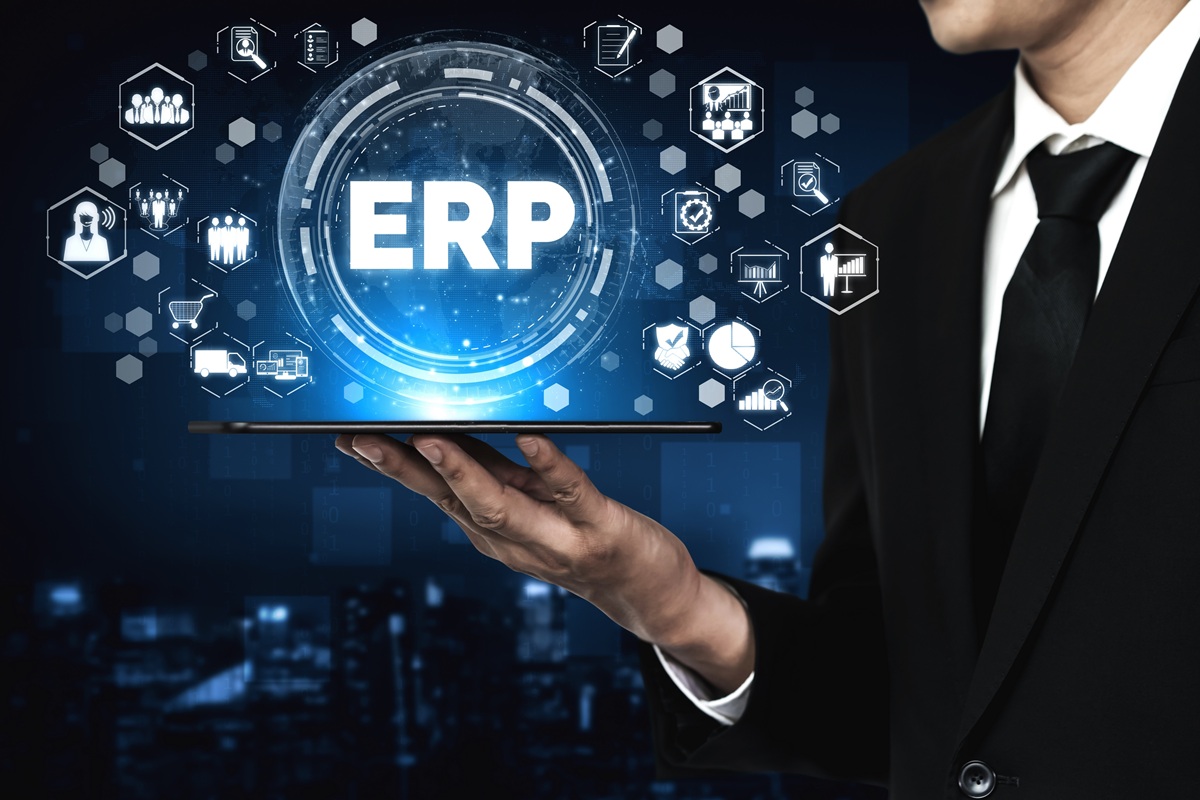
A modern ERP solution typically includes:
- Financial Management – General ledger, payables, receivables, budgeting, and financial reporting
- Inventory & Supply Chain Management – Real-time stock tracking, procurement, and demand planning
- Sales & Customer Management – Order processing, customer data, and sales tracking
- Project & Service Management – Resource planning, project costing, and service delivery
- Reporting & Analytics – Dashboards and business intelligence for data-driven insights
In addition, modern ERP platforms now incorporate:
- Generative AI – Natural language queries, automated report generation, and intelligent summaries
- Agentic AI – Autonomous workflows, proactive recommendations, and system-triggered actions
Cloud ERP vs Traditional ERP
Modern businesses are increasingly adopting cloud ERP solutions due to their flexibility, lower upfront costs, and ability to continuously evolve with new capabilities.
Aspect | Traditional ERP | Modern Cloud ERP |
|---|---|---|
Deployment | On-Premise | Cloud-based |
Accessibility | Limited | Anytime, anywhere |
Maintenance | Managed internally | Vendor-managed |
Scalability | Limited | Highly scalable |
Intelligence | Minimal | AI-driven insights and automation |
How ERP Transforms Business Operations
Implementing an ERP solution is not just a technology upgrade – it is a business transformation.
Finance teams gain real-time financial visibility and AI-assisted insights. Operations teams improve inventory control and benefit from predictive planning. Sales teams gain better customer insights and faster order processing. Management gains a holistic, real-time view of the entire organization, supported by intelligent recommendations.
This enables organizations to move from reactive decision-making to proactive, data-driven, and increasingly autonomous operations.
Why Choose Microsoft Dynamics 365 Business Central
For businesses looking to modernize, Microsoft Dynamics 365 Business Central is a powerful cloud ERP solution that combines functionality, flexibility, and AI innovation.
Key advantages include:
- Seamless integration with Microsoft 365 (Outlook, Excel, Teams)
- Built-in analytics and reporting capabilities
- Scalable architecture to support business growth
- Integration with Power Platform (Power BI, Power Automate, Power Apps)
- Microsoft Copilot (Generative AI) for enhanced productivity
- Emerging Agentic AI capabilities to automate and execute business processes
Business Central serves as a digital core, connecting ERP, CRM, eCommerce, and operational systems into a unified ecosystem.
Conclusion
A modern enterprise resource planning solution is no longer optional – it is essential for businesses operating in a digital and AI-driven world. By combining integrated processes with Generative AI and Agentic AI, ERP systems enable organizations to move beyond efficiency towards intelligent, scalable, and future-ready operations.
Ready to Modernize Your Business?
At ML IT Partners Sdn Bhd, we specialize in helping businesses across Malaysia implement and optimize Microsoft Dynamics 365 solutions. With decades of experience in ERP and CRM, we help organizations move from fragmented systems to a fully integrated, intelligent business platform.
Whether you are upgrading from legacy systems or exploring ERP for the first time, our team can guide you through every step – from strategy to implementation and beyond.
As a trusted ERP provider in Malaysia, we are here to support your transformation journey.
Reach out to us today to discover how you can modernize your operations with Dynamics 365.